Month: May 2014

Italy 1994

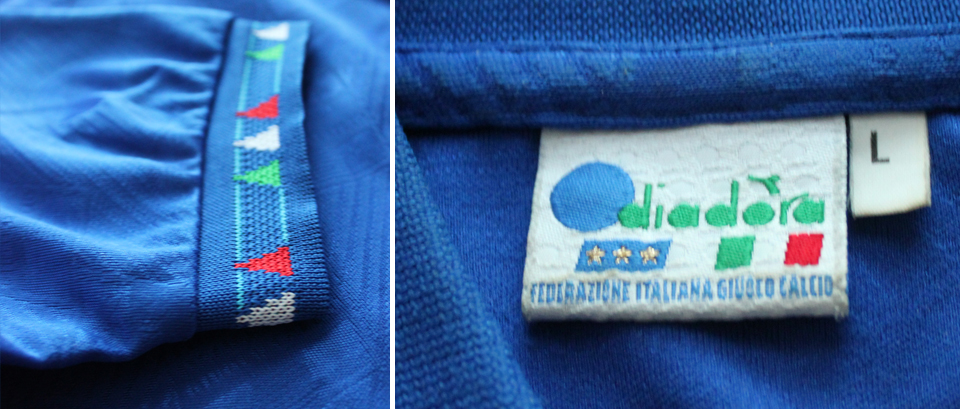
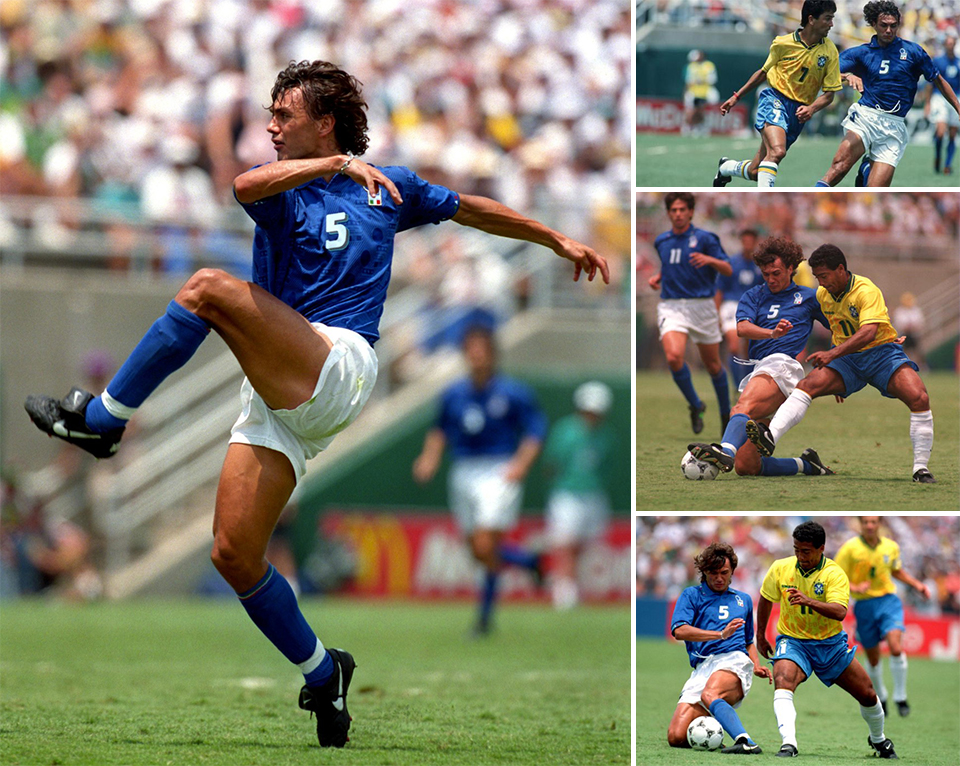
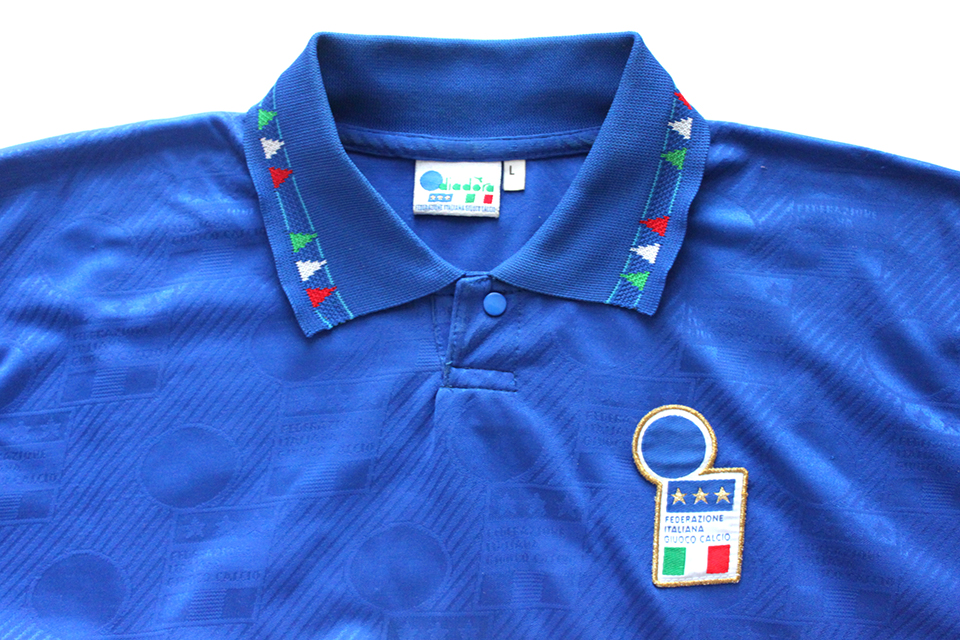
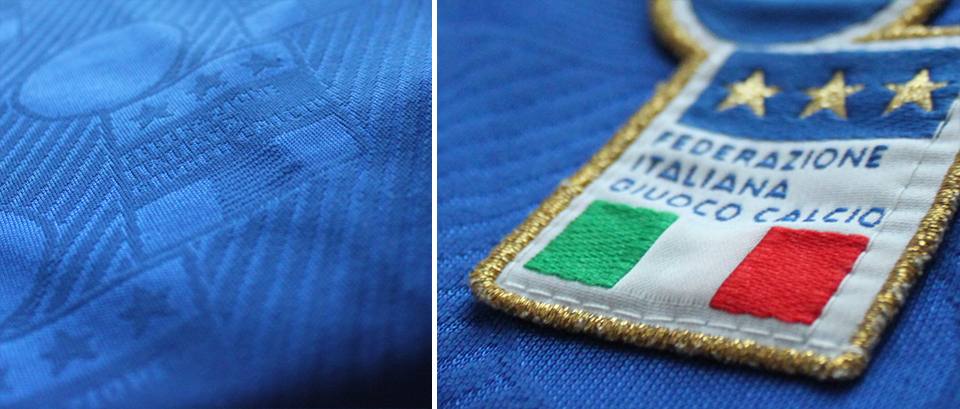
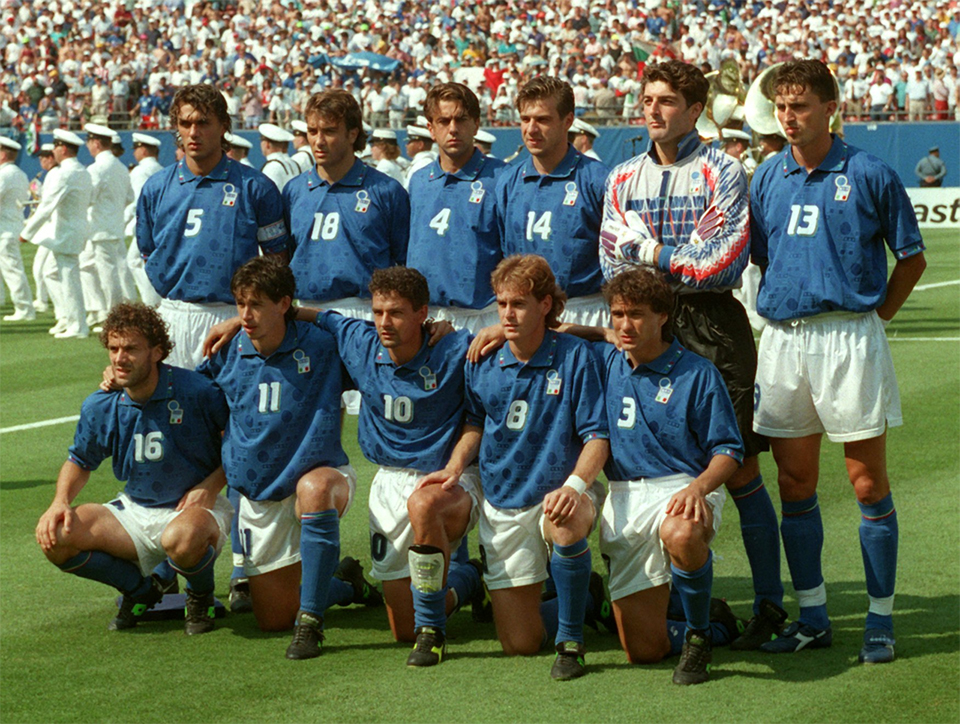
By the early 1990s the Italian national team had reached something of a turning point. While it had been an undeniably positive performance, the host nation had been disappointed with its third place finish at Italia ’90, a result from which they struggled to recover, failing to qualify for the 1992 European Championships. This crisis on the pitch perhaps provoked the most significant changes to the Azzurri kit in over a decade. That summer the FIGC unveiled a new logo, a somewhat contrived design involving a tilted rectangle and circle that awkwardly formed to create a lowercase “I”, though to most observers the device was barely apparent. The new badge was debuted with a new Diadora shirt in the summer of 1992, a design which was then further enhanced upon for the 1994 World Cup. Arrigo Sacchi’s Italy wore the new shirt for the first time in a qualifier for the tournament in late 1993 against Scotland in Rome. While still the same Azzurri blue as ever, the new logo was now interwoven into the fabric itself, creating a bizarre blue-on-blue outsized polka dot effect.
italy 94 shirt
italy 94 shirt2
italy 94 shirt1

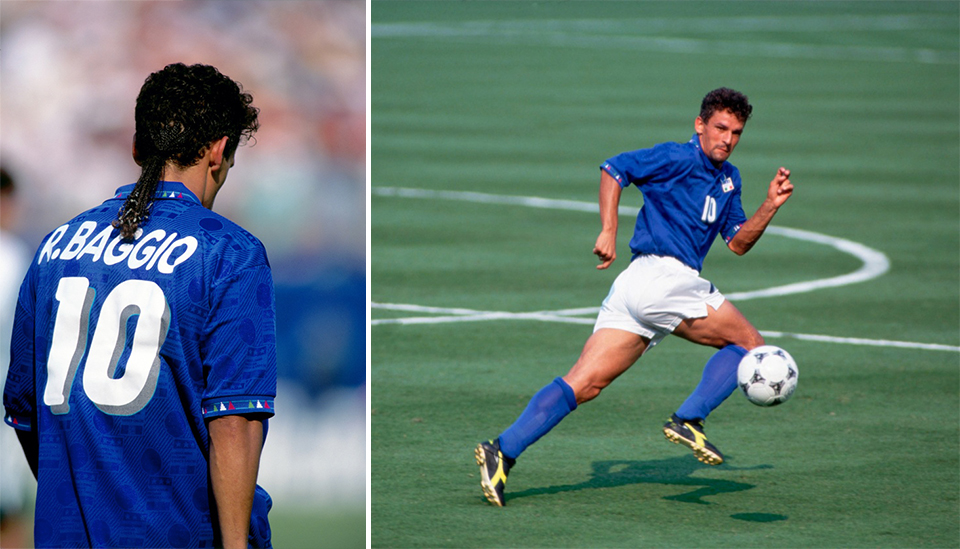
Gone were the classic tricolore striped trim which had adorned the collar and cuffs since Italy’s World Cup triumph of 1982. In their place were a series of green-white-and-red triangles, further evidence of Diadora’s new-found fixation with geometric shapes. On early versions of the shirt the triple triangle device even featured on the shirt numbers, which represented perhaps the biggest departure of all. The 3D characters which had been commonplace for much of the decade were ditched in favour of a rounded, italicized design. A similar typeface itself had been sported by the Danish national side for some time, yet in Italy’s case it came with a dark grey shadow. The new kit certainly raised eyebrows at the time of its release, though soon gained acceptance not least due to Italy’s memorable tournament in the USA. I purchased mine in April 1994 from Casa dello Sport, an extremely well-curated shop on Florence’s Via Tosinghi that carried every shirt in Serie A and B plus most international jerseys too from across Europe and South America. The entrance was cluttered with Polaroids of celebrity visitors, including Keanu Reeves and Billy Crystal. It’s hard to imagine such a place today, when most soccer jerseys are purchased online and even the best sports stores carry only the shirts of the biggest clubs.
italy 94 ireland
italy 94 norway

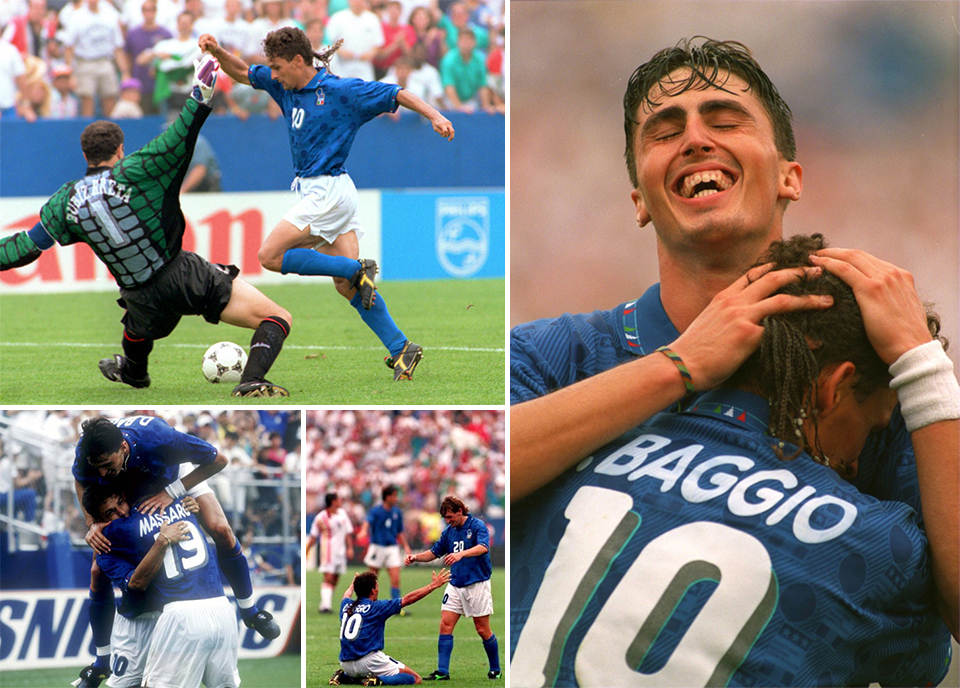
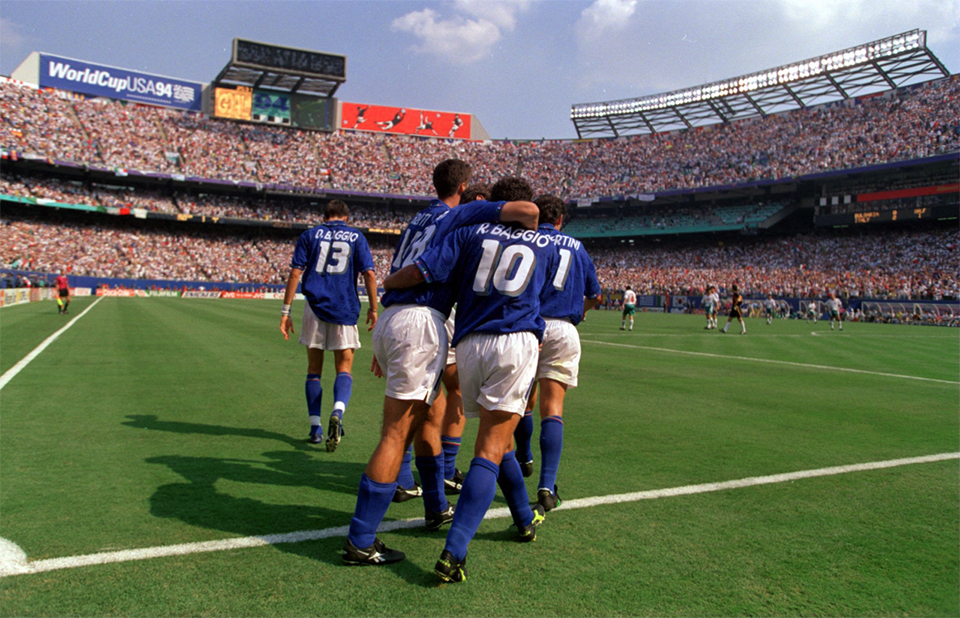
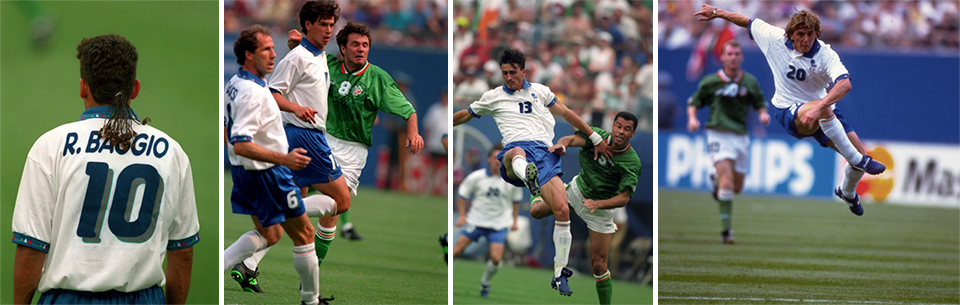
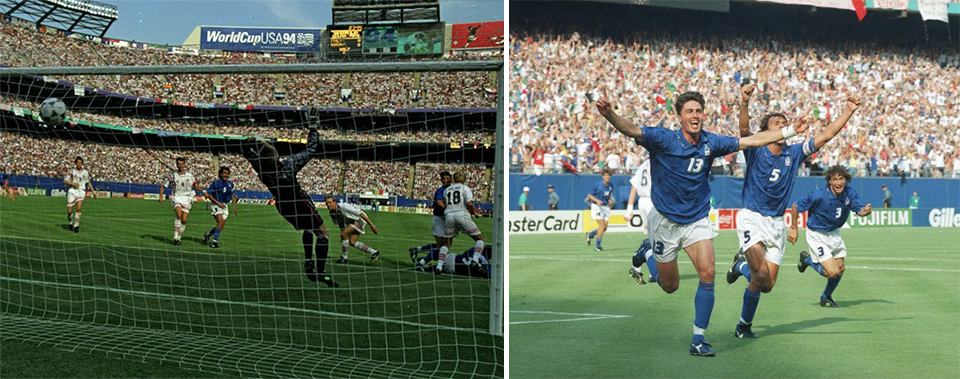
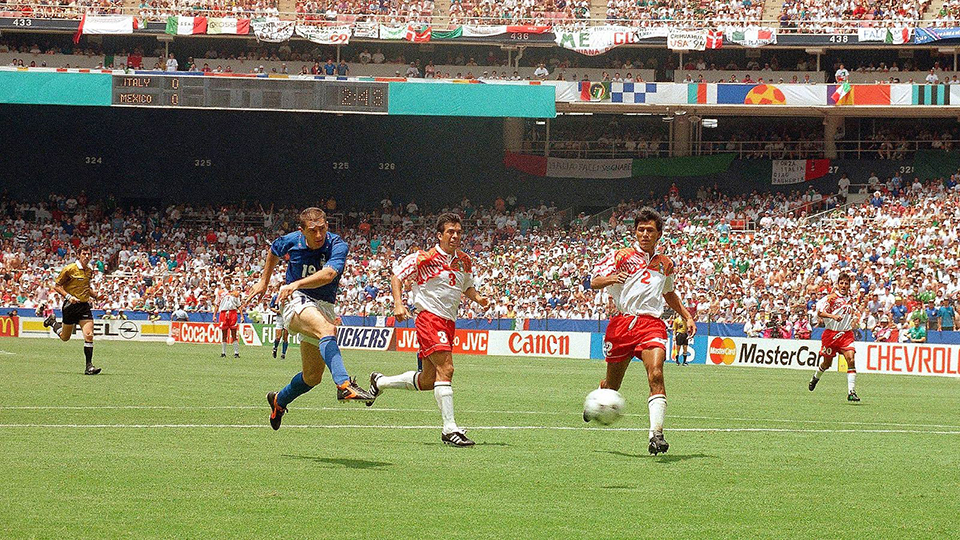
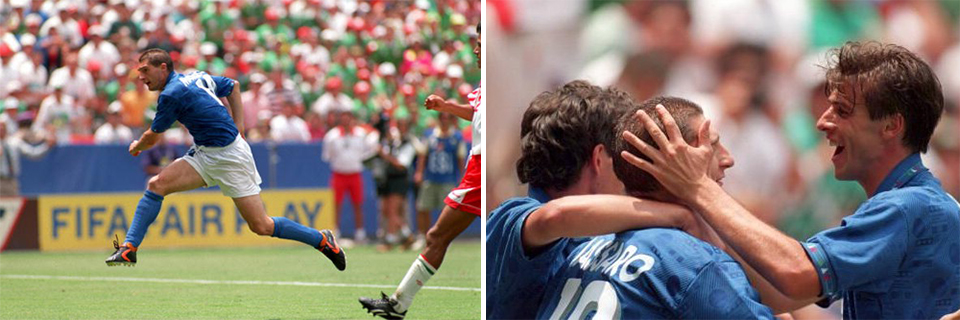
Later that summer Italy’s World Cup campaign got off to the worst possible start: a 1-0 defeat to the Republic of Ireland at the Giants Stadium in New Jersey. In their next game against Norway things only got worse. Goalkeeper Gianluca Pagliuca received a red card in the first half for handling outside the box. In order to bring on reserve ‘keeper Luca Marchegiani, coach Arrigo Sacchi removed Roberto Baggio, much to the amazement of the watching world — and to Baggio himself. Fortunately another Baggio, the tall midfielder Dino, was on hand to head home a winner for the ten men. Later in the game Franco Baresi’s involvement in the tournament was plunged into further jeopardy after the veteran defender hobbled off with a damaged meniscus. Sacchi had been criticised before the tournament for his squad selection. Neither the young Milan full-back Christian Panucci nor an in-form Gianluca Vialli had made the cut. Now, with the competition underway, Sacchi seemed undecided, switching back and forth between Pierluigi Casiraghi and Daniele Massaro as partners for Roberto Baggio. Meanwhile, Lazio’s Giuseppe Signori — Serie A’s capocannoniere for the last two seasons — was relegated to the left of midfield. When the Azzurri faced Mexico in their final group game in Washington, D.C., Casiraghi was replaced by Massaro at half-time. The Milan forward’s first contribution was to fire Italy into the lead just two minutes later. Marcelino Bernal equalised for the Mexicans but the 1-1 draw the RFK Stadium was enough for Italy to squeeze through to the second round in third place.
italy 94 mexico 1
italy 94 mexico 2

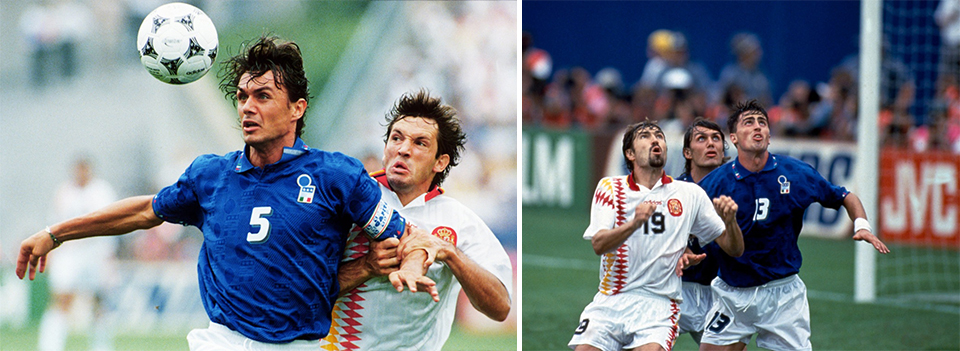
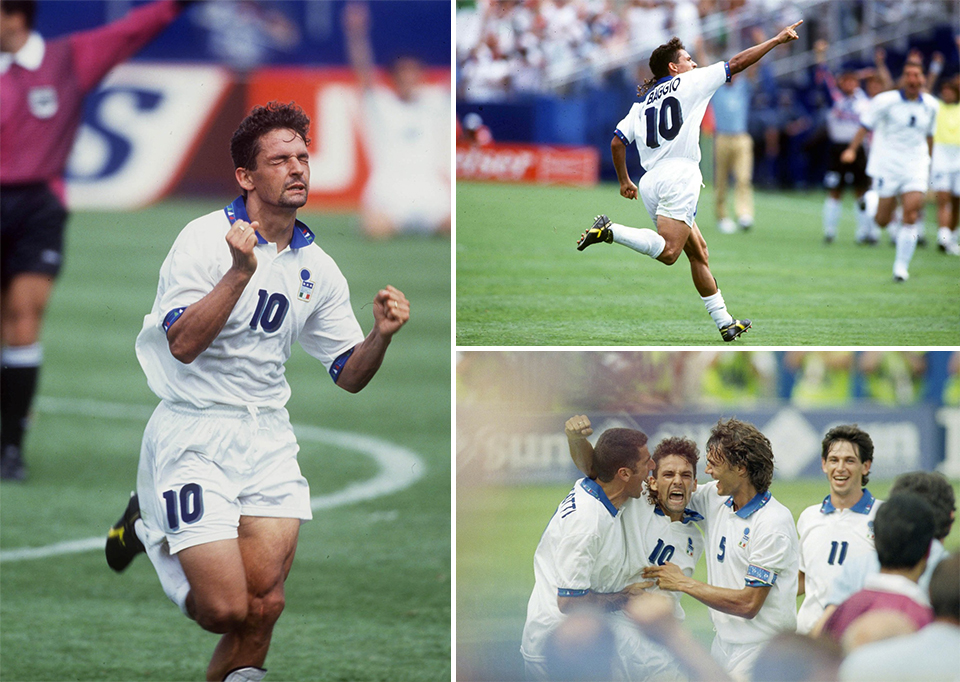
It was against Nigeria in Boston that Roberto Baggio slipped into the role of Italy’s saviour. Again playing with ten men, after Gianfranco Zola’s harsh dismissal, Italy were moments away from elimination when Il Divin Codino latched onto a ball from Roberto Mussi to slot home an equaliser with seconds to spare. In extra-time Baggio got his second — a penalty which he dispatched in off the post — to secure his side’s place in the quarter-finals. I was driving through northern Italy the day the Azzurri faced Spain, and shortly after exiting the autostrada we asked the man in the toll booth the score (he had the game on a miniature TV). “Uno-zero, Dino Baggio” he responded. Indeed Dino had opened the scoring with an unstoppable drive from distance. We arrived at a bar in Serriciolo (a place I’ve written about at greater length here) to see Spain gain the upper hand in the second half, equalising through José Caminero. Only a last-ditch save by Pagliuca (with his feet) and and a brilliant tackle by Alessandro Costacurta prevented Italy from going behind. For efficiency and to avoid confusion RAI commentator Bruno Pizzul had taken to referring to the two Baggios by their first names only, so maybe I’ll do the same here. Extra-time loomed, when Signori reached Nicola Berti’s chipped ball and lofted a pass beyond the last Spanish defender and into Roberto’s path. The Juventus forward beat Zubizarreta to the ball, took it wide of the Spanish goalkeeper and slotted home from the a tight angle under the stretching leg of Abelardo. Once again Italy had left it late, but there was still time for Mauro Tassotti to fling a vicious elbow into the face of Luis Enrique. After the game, the 34-year-old defender received a nine-match ban, effectively ending his Italy career. Had the referee spotted the incident, it would have resulted in a certain penalty for Spain.
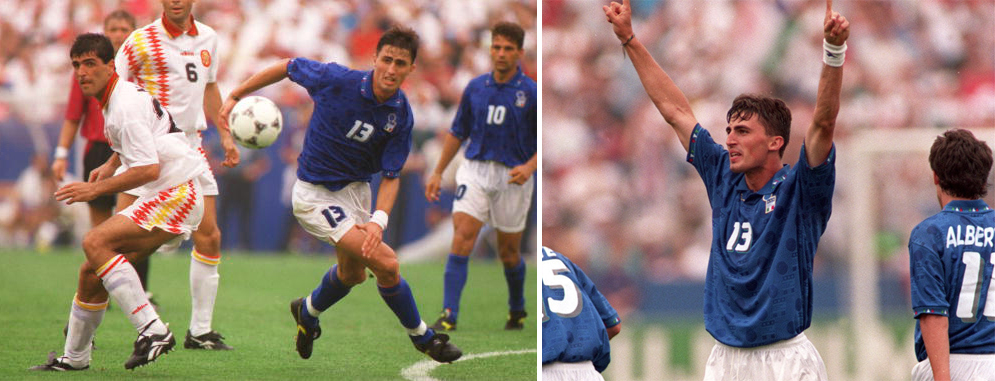
italy 94 nigeria
italy 94 spain 1
italy 94 spain 2
italy 94 spain 3

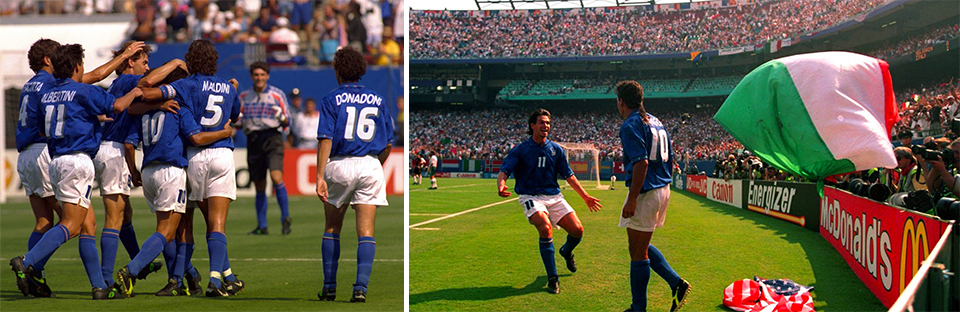
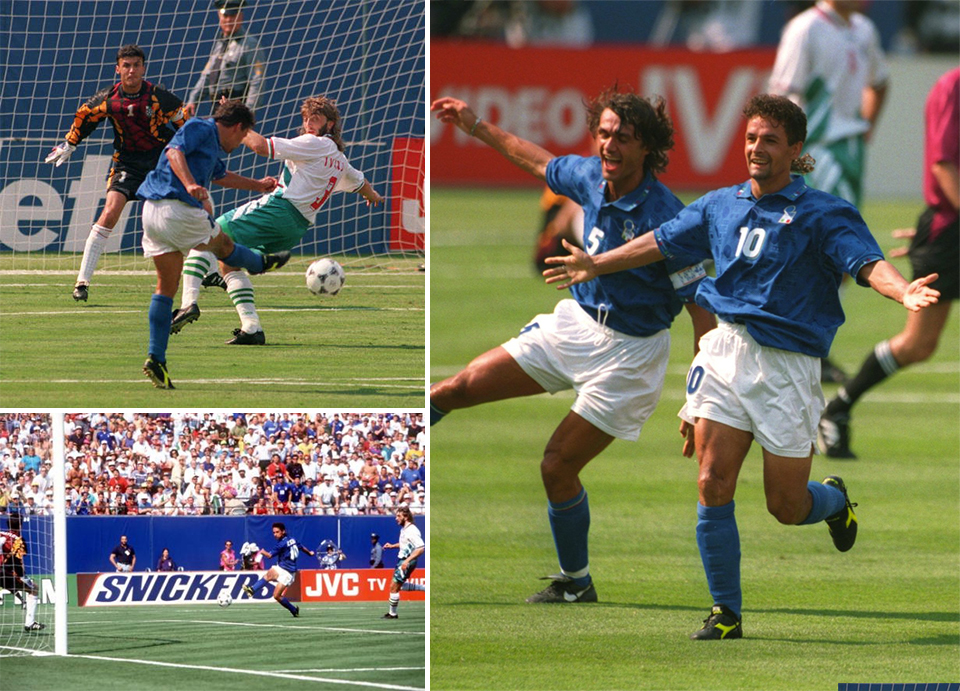
We returned to the bar for the semi-final, for which Italy returned to the Giants Stadium. Their unlikely opponents were Bulgaria, who had knocked out the holders Germany in dramatic fashion in the previous round. It was the match in which the Azzurri gave their best performance of the tournament, producing a first-half display of fluid attacking football rarely seen at such a level. What a contrast from four years earlier, when the pressure on the Italians to win at home had stifled their attacking instincts. Inevitably, Roberto opened the scoring with a beautiful solo effort, hurdling two defenders before calmly curling the ball into Boris Mikhailov’s far corner. Milan’s Demetrio Albertini was pulling all the strings in midfield, striking the post with an terrific angled shot, then seconds later prompting a fine save from Mikhailov with a deft chip. Roberto met Albertini’s dinked ball into the box from the resulting corner, and fired in a neat shot for his and Italy’s second. Bulgaria’s Hristo Stoichkov pulled a goal back — his sixth of the tournament — from the penalty spot before half-time, but Italy held on for their third consecutive 2-1 victory. But there was bad news in store for Italy: Costacurta’s yellow card ruled himself out of the final. Remarkably, Baresi — who had missed the last four games after undergoing surgery two weeks earlier — returned to the side to take his place.
italy 94 bulgaria 6
italy 94 bulgaria 2
italy 94 bulgaria 1

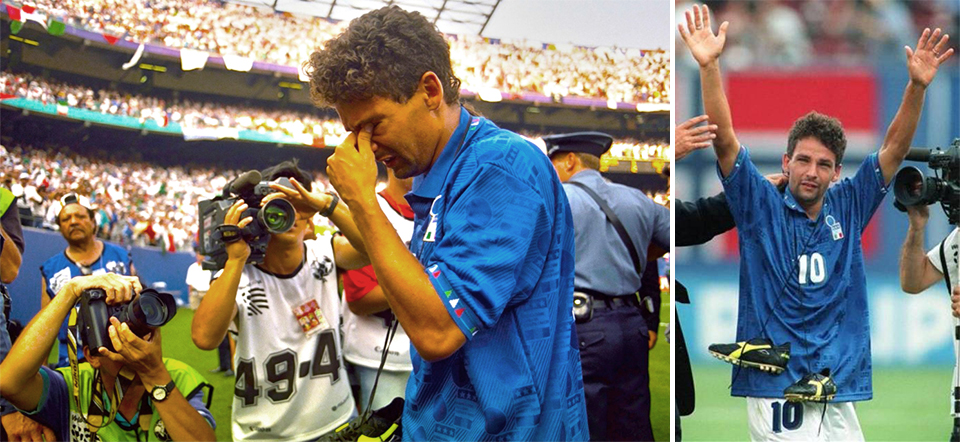
Italy’s two-goal was replaced in the second half, officially to rest for the final in Pasadena, but his tears and precautionary ice-pack suggested an injury. The 26-year-old was at the peak of his career, having won a UEFA Cup and Ballon d’Or the previous year. Now he had embarked on embarked on a one-man, three-match, five-goal crusade that culminated with a berth in the World Cup Final against Brazil, the likelihood of which had seemed highly improbable just two weeks earlier. His performances in the latter stages of the competition recalled those of Paolo Rossi’s in 1982: both players had shaken off indifferent early results to come up with vital goals at just the right moment. Yet while Rossi’s good run continued through to the final, a clearly unfit Baggio was left to hobble about the Rose Bowl in the midday sun, his thigh heavily strapped.
italy 94 bulgaria 4
italy 94 bulgaria 7

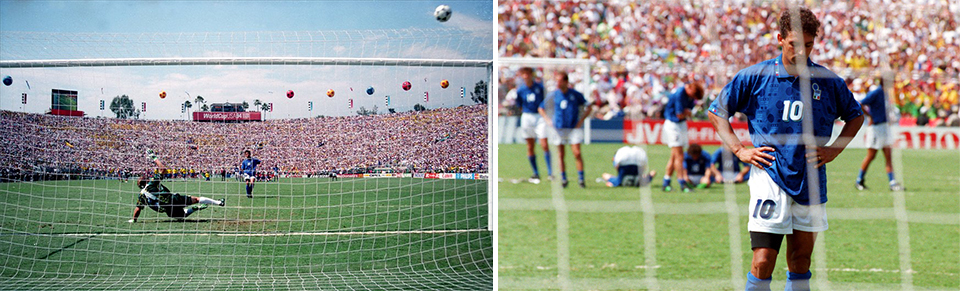
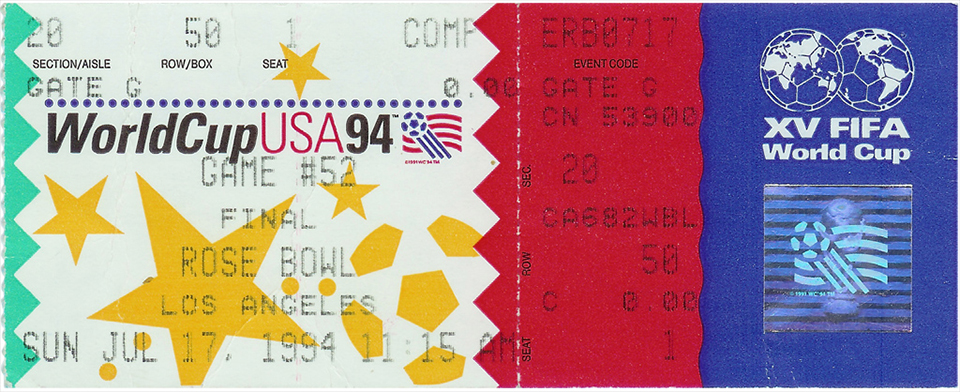
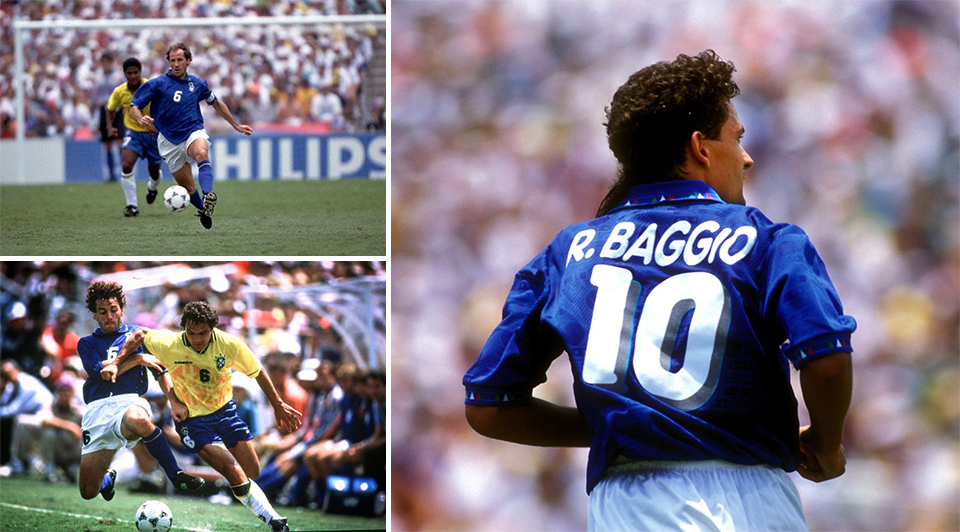
For the final the bar moved its television set outside into the car park and set up rows of seats for locals to come and watch. I sat wearing my new Italy shirt holding a tricolore flag on a stick which I’d bought six years earlier in Siena. I was one of my most memorable football viewing experiences, surrounded by a small town of nervous and excited Italian strangers, our faces bathed in the glow of the screen. I remember the local boys chanting “Cafú, tu sei un figlio di puttana!” after the full-back came on for the injured Jorginho. The 1994 final is often recalled as a negative, even boring final, probably because it ended goalless after 120 minutes. But the game was not without incident, and poor finishing by both sides was the only reason the contest went to the wire. Romário, Bebeto and Massaro all missed good chances, and Roberto squandered an opportunity he would have probably buried a few days earlier. Both sides resorted to long-range efforts in extra-time, except for Brazilian substitute Viola, whose skillful run almost resulted in a fantastic winning goal. And so a World Cup final was decided by a penalty shoot-out for the first time, a most unsatisfactory climax to what had generally been a highly entertaining tournament.
94 final ticket
italy 94 brazil 1
italy 94 brazil 2a

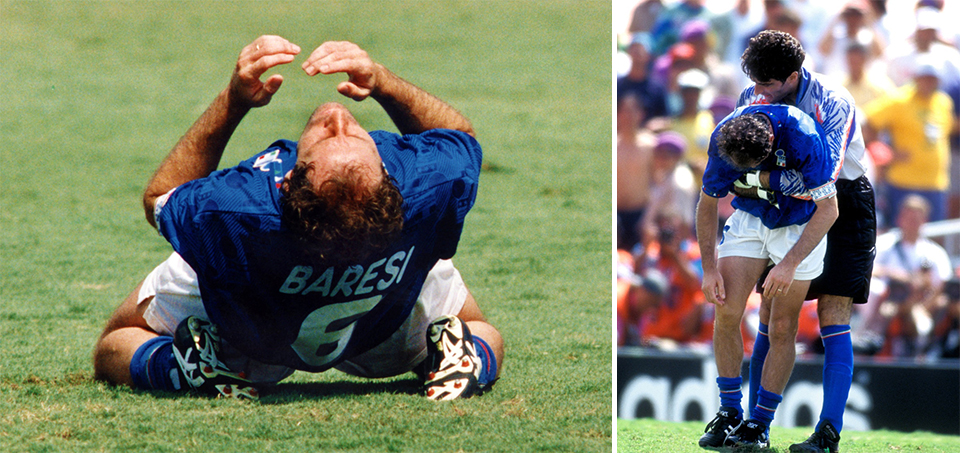
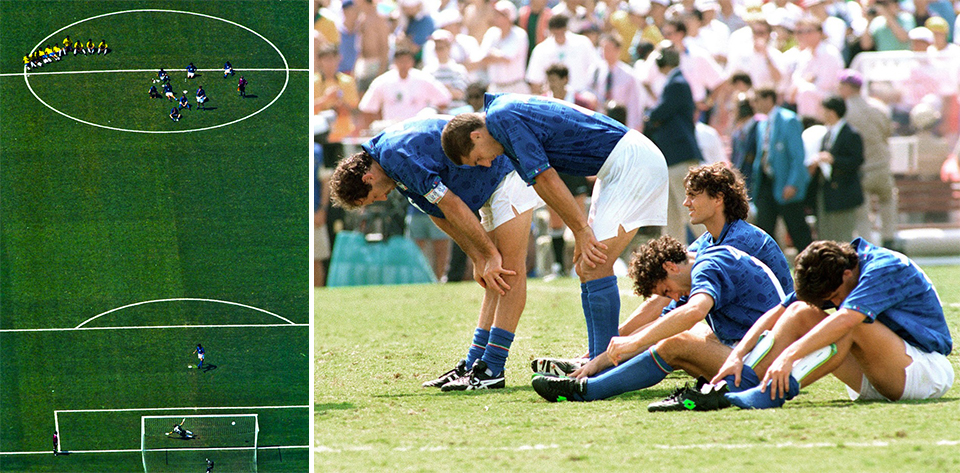
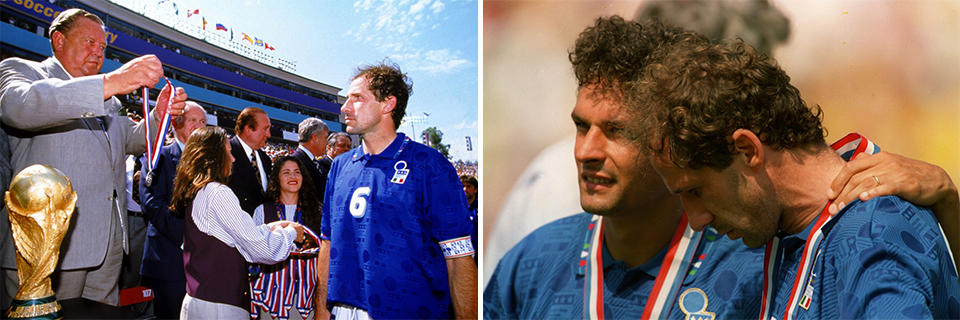
Italian hopes were restored when Pagliuca saved from Marcio Santos following Baresi’s initial miss. Then Albertini, Romário, Evani and Branco all scored. Taffarel saved from Massaro’s fourth kick and then Brazilian captain Dunga scored, putting all the pressure on Italy’s five-goal hero Roberto Baggio, who launched his tired shot into the skies of Southern California. I can still remember Pizzul’s typically understated utterance the moment Brazil were crowned world champions for a record fourth time: “Alto. Il campionato del mondo è finito.” I’d felt a strong connection to the Azzurri since the previous World Cup in Italy, and when Baggio’s last penalty sailed over the bar those feelings grew even deeper. Women and children were in tears, and powerless ragazzi began hurling plastic and wooden chairs over the fence and onto the train tracks out of sheer frustration. For the next few days the atmosphere was one of a nation in mourning.
italy 94 brazil 3
italy 94 brazil 2
italy 94 brazil 4

From that point on I always felt that Baggio seemed to carry an air of melancholia, as if a part of him had remained forever rooted to that penalty spot in Pasadena. “Penalties are missed only by those who dare take them,” he would say, almost as if it were a mantra he was using to get over the trauma. Through the rest of the decade Baggio’s involvement with the national team would become more sporadic. Italy flopped at Euro ’96 and lost again on penalties to the hosts at France ’98 (although this time Baggio scored his kick). The quirky “I” logo was finally removed from the Azzurri shirt in 1999 and replaced with the classic tricolore badge sported throughout the sixties and seventies, as football design became increasingly influenced by its past in the new millennium. Subsequent Italy coaches including Dino Zoff and Giovanni Trapattoni were reluctant to recall Baggio to the team, citing age, fitness concerns and club form as reasons to leave him out. After not making the squads for the 2002 World Cup nor Euro 2004 despite huge public demand, Baggio was given an international send-off in a friendly against Spain in Genoa, a match that marked his 56th cap. No Italian player had been honoured in this way since Silvio Piola, but to me it seemed appropriate. Whether it was because he was denied football’s ultimate prize in the cruellest manner possible, or because this pony-tailed Buddhist was such an unconventional Italian hero, his popularity had never faded. Having represented Vicenza, Fiorentina, Juventus, Milan, Bologna, Inter and Brescia, Baggio always seemed to belong more to the national team than to any one club side.
italy 94 brazil 5

Italy 2000

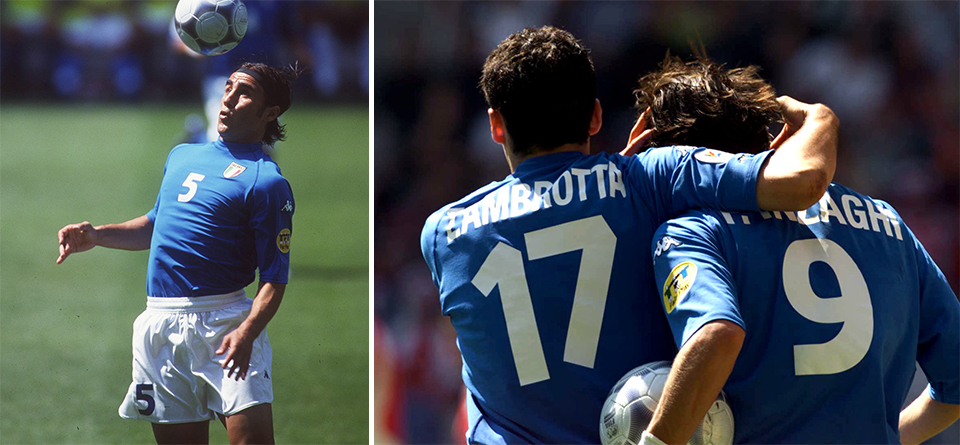
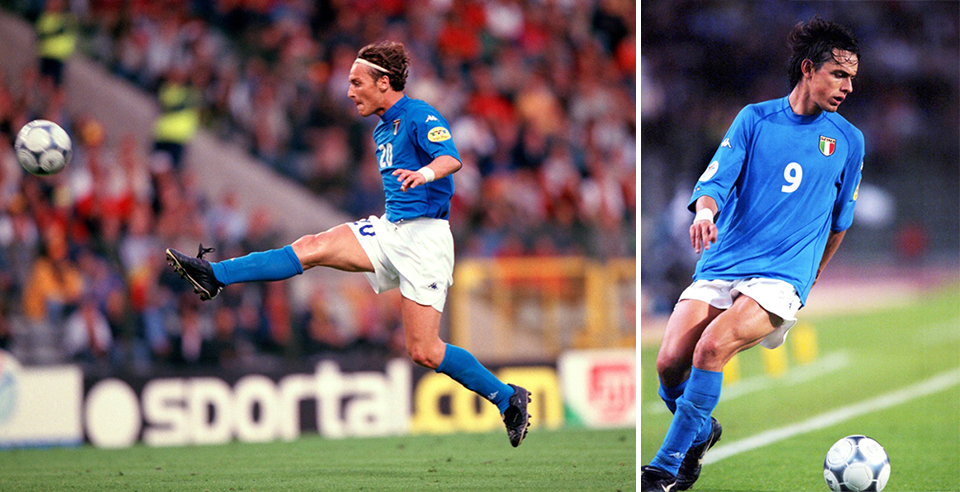
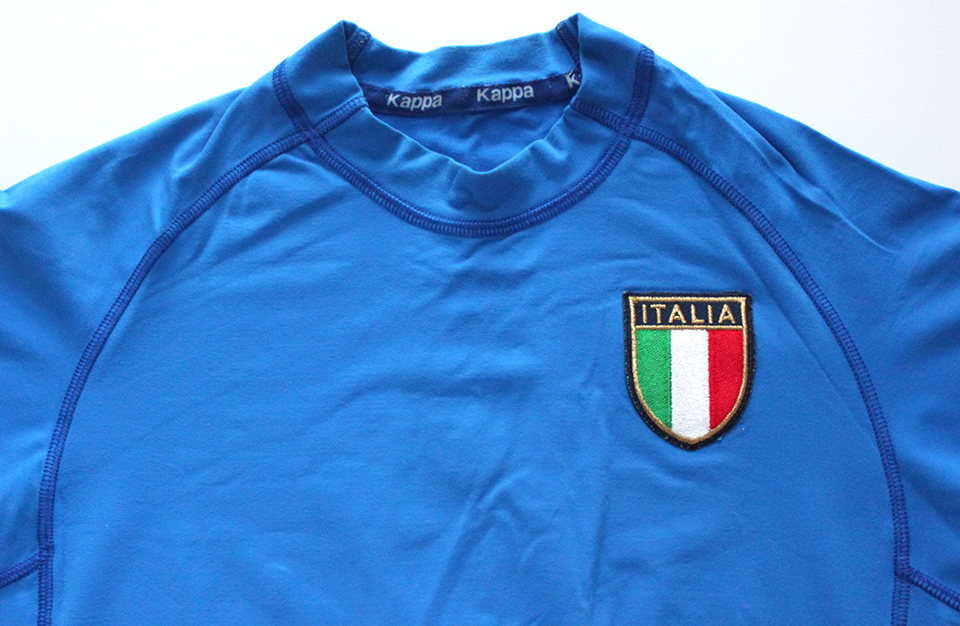
The 1990s had not been kind to Italy. While the national team had continued to reach the latter stages of major tournaments, they had been thwarted by penalty kicks in the three successive World Cups. The new century did not quite promise a new beginning, but it certainly signaled a new look. Italy arrived at Euro 2000 sporting an innovative kit design that proved highly influential. Made from a figure-hugging blend of polyester and spandex, Kappa’s “Kombat” shirt accentuated the wearer’s physique, lending players an added degree of athleticism while supposedly preventing defenders from resorting to the cynical tactic of shirt tugging.

italy2000_cannavaro

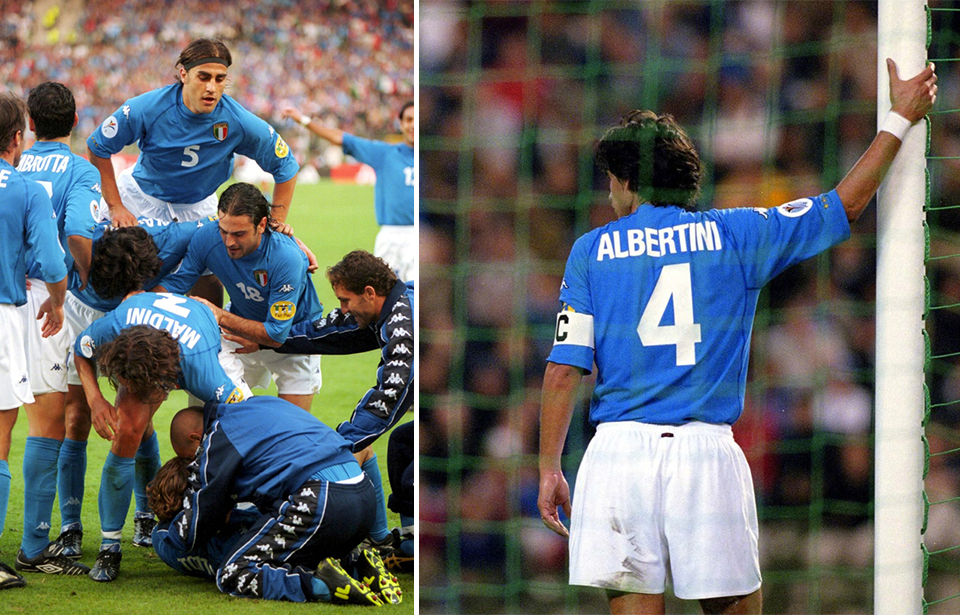
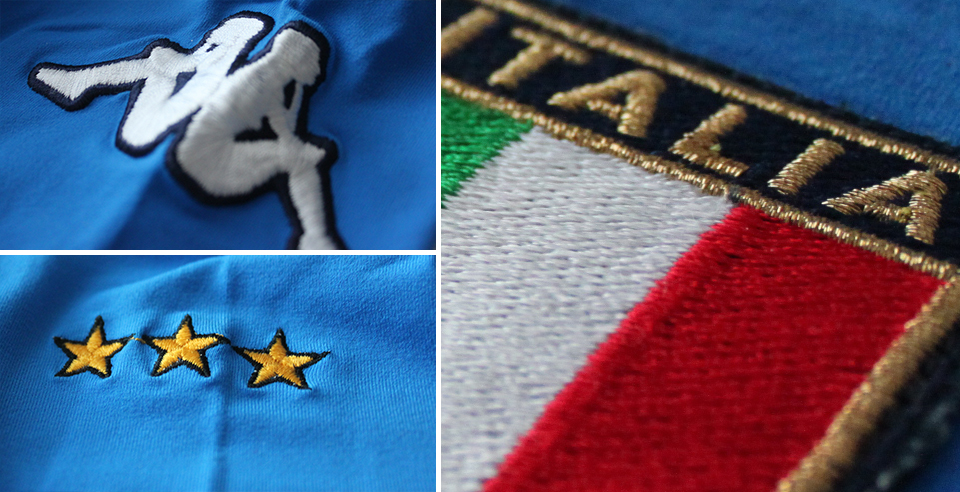
The shirt was a lighter shade of blue for Italy, more akin to Napoli than the national team. Other unprecedented details included deliberately exposed stitching and the repositioning of the three stars (for each World Cup win) to the sleeve, where the inclusion of the Kappa logo represented another novelty which is quite commonplace today. Upon its launch the revolutionary kit was surrounded in hype and speculation, and fans were initially skeptical about the idea of their heroes parading in skin-tight soccer uniforms. As it happened, the shorts and socks remained fairly conventional, while Italy’s style conscious set of internationals opted for wearing their shirt a size too large, providing them with a decidedly more comfortable fit with which to face the rest of Europe’s elite. With its retro badge and spare design, the shirt itself had a sort of modern simplicity, which at the time was a breath of fresh air following the anything-goes approach to kit design that had borne some truly garish results in the 1990s.

italy 2000 albertini2

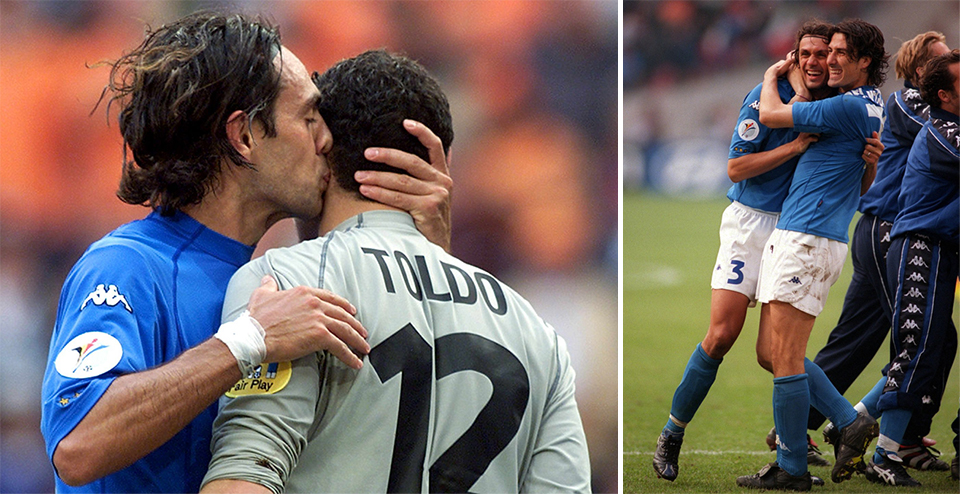
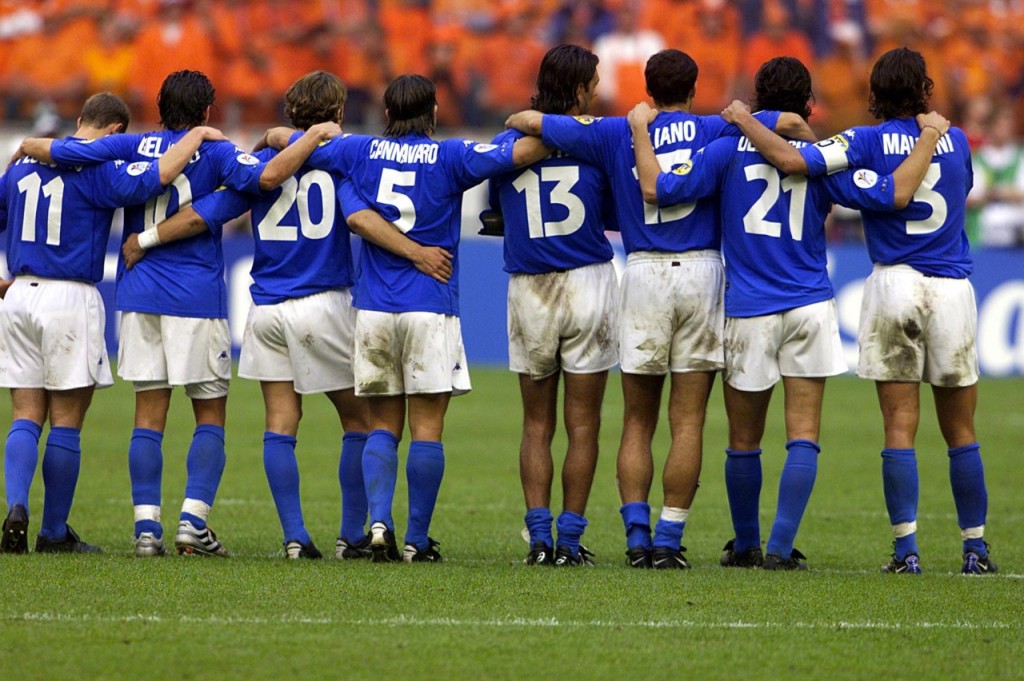
Coached by former World Cup-winning captain Dino Zoff, Italy boasted an exceptional squad going into the tournament, despite having lost first-choice goalkeeper Gianluigi Buffon and Inter striker Christian Vieri, who’d netted five goals at France ’98. Their understudies proved more than capable: Francesco Totti, Alessandro Del Piero and Filippo Inzaghi all grabbed goals as Italy advanced to the semi-final. In Amsterdam against joint-hosts Holland, Francesco Toldo had the game of his life between the posts, saving three penalties – one in normal time and two in a shoot-out – as the Azzurri marched to a final against World Champions France.

italy2000_totti

In Rotterdam Italy were seconds away from their first European trophy in thirty-two years when Silvain Wiltord capitalized on a rare error at the back to equalise. In extra-time, David Trezeguet fired home a spectacular “Golden Goal” winner. As the country recovered from another bitter defeat, Zoff resigned in protest following public criticism from Prime Minister Silvio Berlusconi. A few months later, having moved to the northern Italian town of Pavia, I picked up my own Italy 2000 shirt (long-sleeved version), no doubt recognising its potential cultural significance.

italy 2000 nesta

Giovanni Trapattoni’s Italy wore an almost identical jersey at the 2002 World Cup, where they were controversially eliminated at the hands of the co-hosts Korea amidst an avalanche of conspiracy theories. Over the next decade Kappa’s “Kombat” uniforms were adopted by some of Europe’s top club sides — including Roma, Auxerre, Sampdoria, Real Betis and Werder Bremen — while spawning a host of imitators. The era may have finally ended in 2012 however, when Roma abruptly announced the end of their long-standing relationship with the brand, citing a significant decline in quality.

italy 2000 shirt

Italy ditched the Kappa shirts in 2003, and replaced them with uniforms by Puma. While the Azzurri have had more on-field success while wearing the German manufacturer — winning the World Cup in 2006 and reaching the final of Euro 2012 — none have proven as memorable or as popular as those worn by Euro 2000’s runners-up. The influence of the “Kombat” series mustn’t be underestimated: over the last few seasons football strips have become increasingly slim-fitted to the extent that today it’s not uncommon to see players take the field in truly skin-tight shirts, confirmation that Kappa’s radical departure in kit design was several years ahead of its time.

italy 2000 shirt details

Milan 1990-91

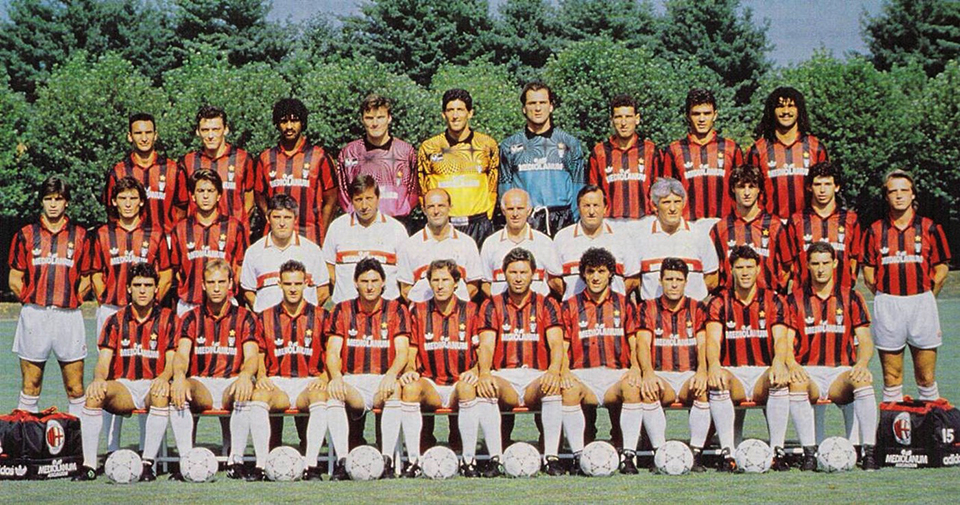
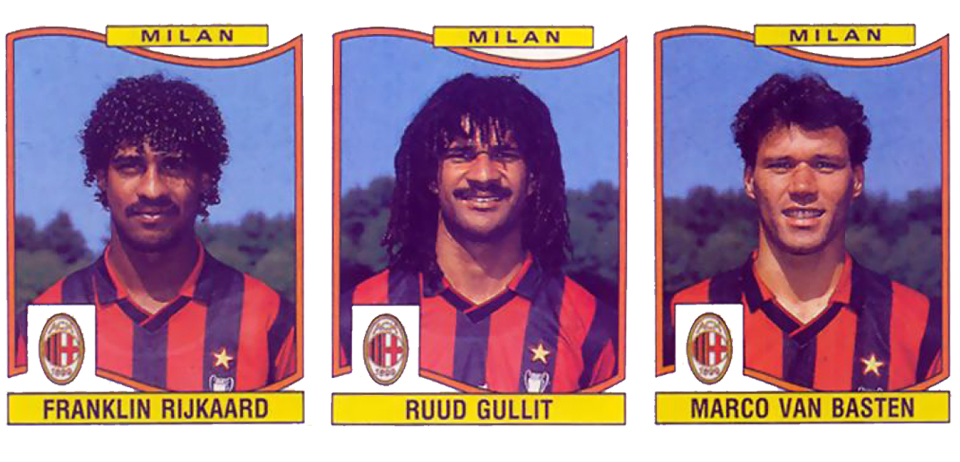
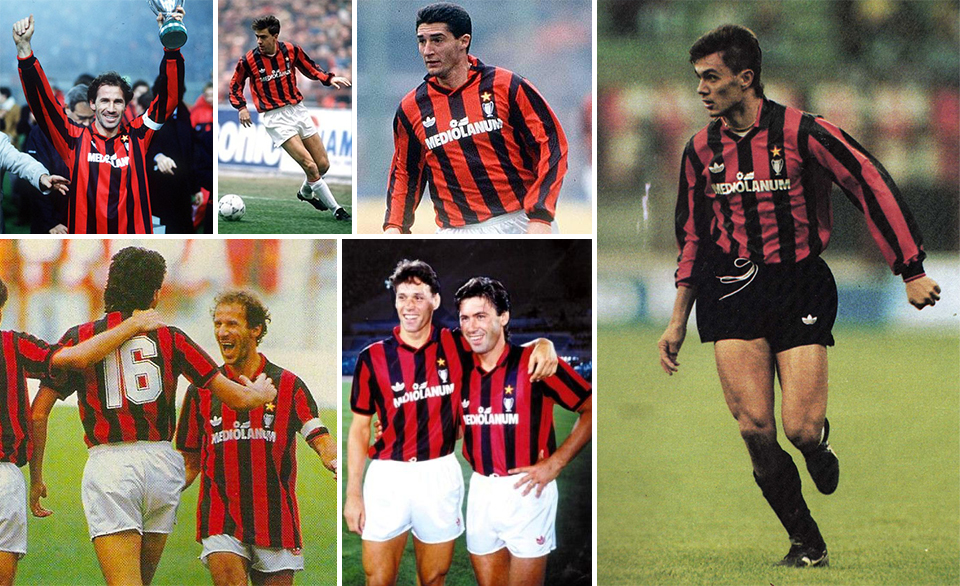
Success was so swift and so absolute for Silvio Berlusconi’s Milan, that it’s easy to forget when he had taken over the presidency the once prestigious club found itself ridden in debt, having spent two seasons in Serie B in the early 1980s. Though the team already boasted some talented local youngsters including Baresi, Maldini, Donadoni and Evani, their foreign stars were aging. Milan lacked that special player — a Maradona or a Platini — necessary to make the extra leap to domestic and European glory. In the summer of 1987 Berlusconi’s finances (funded at the time by his growing media empire) helped secure the talents of young Dutch stars Ruud Gullit and Marco Van Basten. That season Milan pipped Champions Napoli to the Serie A title, their first scudetto in nine years. Later that summer Gullit and Van Basten proved instrumental in Holland’s first major trophy, the European Championship, and after the tournament their international teammate, Frank Rijkaard, joined them at Milan.

milan 90 panini

Berlusconi’s influence was not only economical. He insisted his side produce attractive, attacking football, and his power wielded an unprecedented control over transfers, team selection and technical aspects of the side’s preparation. In Arrigo Sacchi he found the ideal coach, an eccentric but brilliant man, who, despite fielding an imperviously strong back four, represented the antithesis of catenaccio. By the end of the decade Milan were once again the dominant force in Europe, winning back-to-back European Cups in 1989 and 1990, a trophy which had eluded them for twenty years. They topped those victories off on both occasions with successive triumphs in the Intercontinental Cup in Tokyo.

milan 90 dutch trio

Through regular visits to Italy and my burgeoning fixation with calcio I’d become fascinated by Sacchi’s Milan side, and in 1991 I bought the famous maglia rossonera from a store in the northern Tuscan town of Aulla. Given the quality of its domestic league football in Italy was remarkably uncommercialised in those days. All the shirts in the shop were folded in their manufacturers’ plastic wrappers and stacked up to the ceiling; after inquiring about the Milan kit a lady climbed to the top of a ladder to retrieve my size. The shirt was only available with long-sleeves, which seemed impractical to me at the time (it was July) but wholly appropriate once I recalled images of San Siro shrouded in a thick fog, the rossoneri carving out victories from its frosty turf.

milan 90 shirt

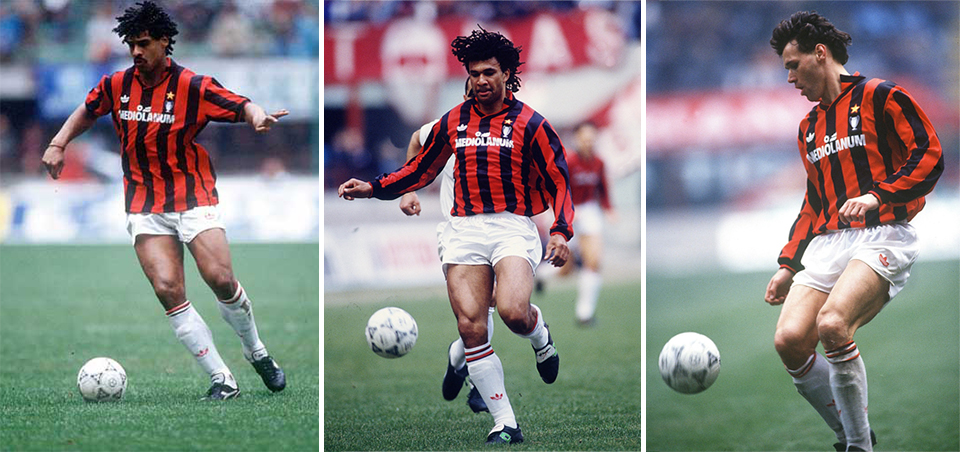
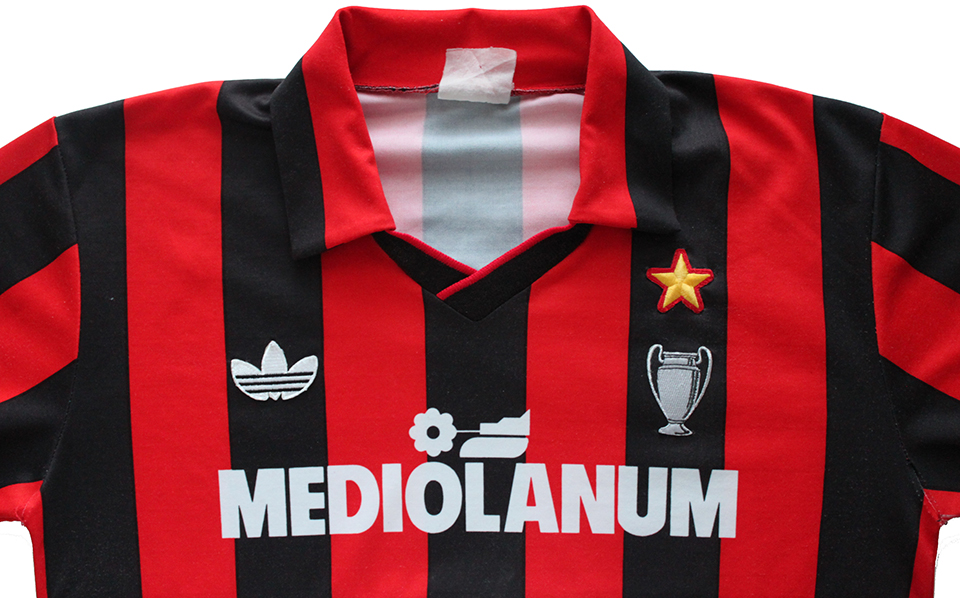
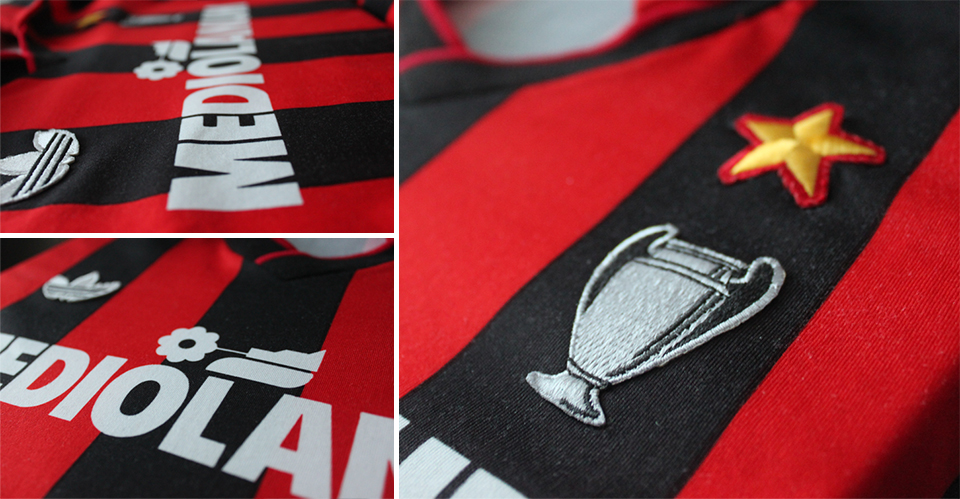
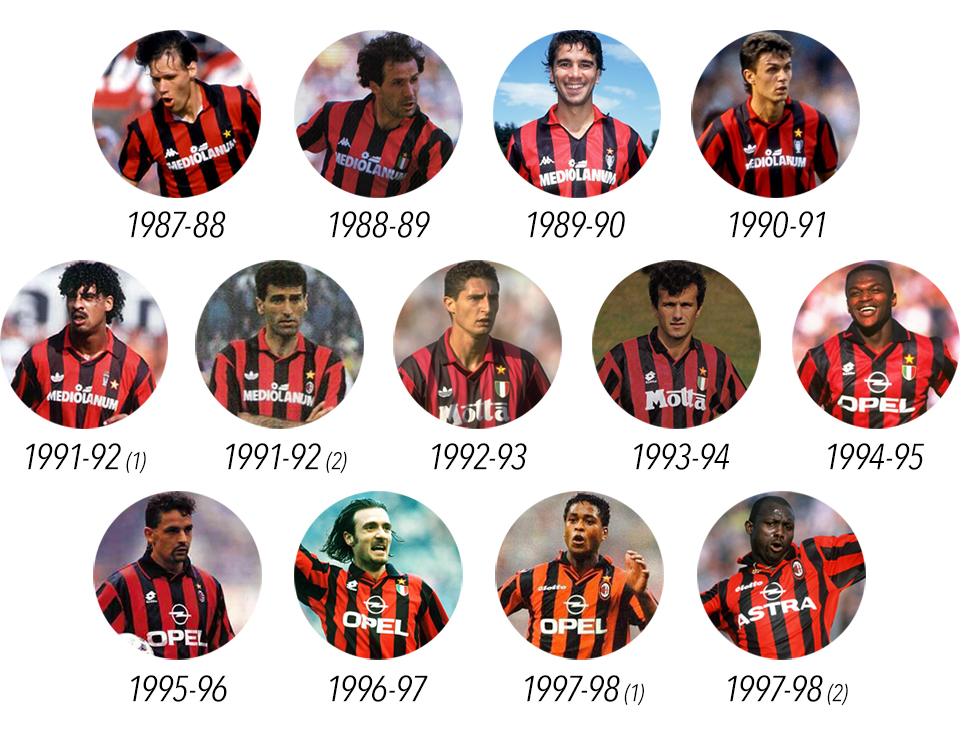
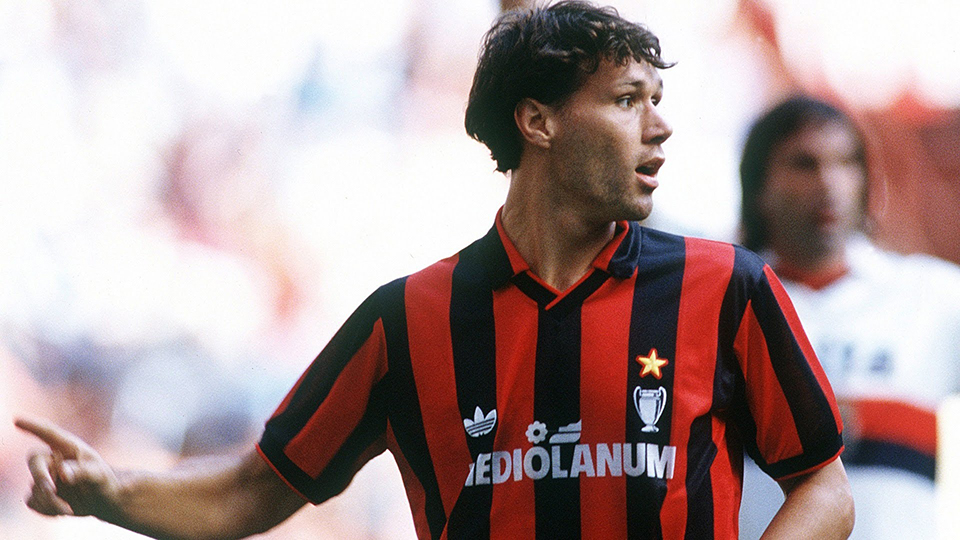
Milan had changed kit manufacturer in 1990, switching from Kappa to adidas, but the shirt had remained essentially unchanged for the last four years. The sponsor was still Mediolanum, Berlusconi’s own insurance company, named for the Latin word for Milan (the city). Above it on the right was the gold star which is earned after ten scudetto wins, beneath which sat an embroidered European Cup celebrating the fact that Milan were the current holders of that trophy (a nice initiative which never caught on). In the 1990-91 season Milan finished second in Serie A, a full five points behind scudetto winners Sampdoria, to whom they lost twice. A defeat to lowly Bari in the penultimate match of the season effectively ended their title hopes.

milan 90 shirt details

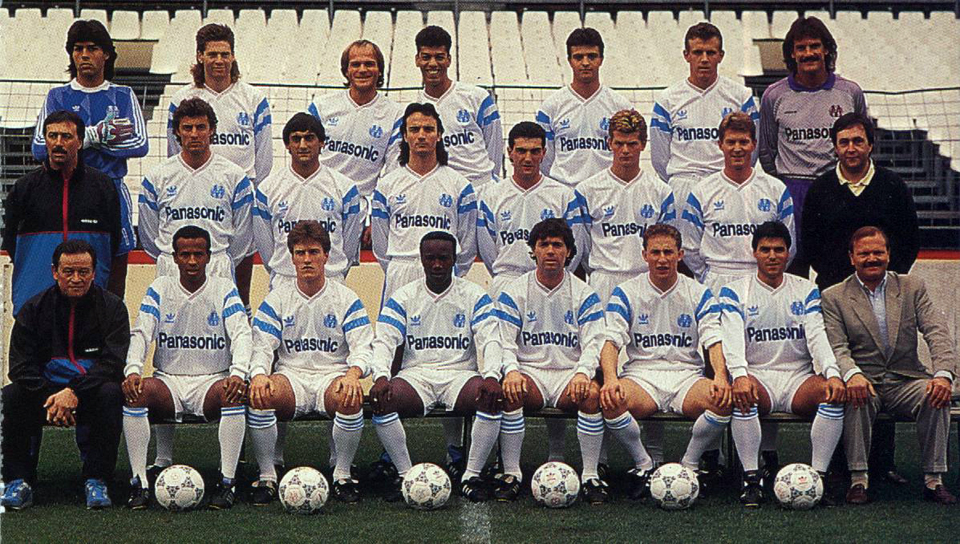
Milan’s good domestic showing was marred by a disastrous European Cup campaign. The rossoneri were aiming for a record-equalling third straight triumph in the competition, and came up against a talented Olympique Marseille team in the quarter-final. The first leg at San Siro ended 1-1; in the return match Chris Waddle had given the French champions the lead on 75 minutes when deep into injury time the floodlights at the Stade Velodrome failed. When power was restored after several minutes Milan refused to return to the pitch – a gesture which most interpreted as a desperate attempt to seize the opportunity for a rematch. Either way the tactic backfired: UEFA awarded a 3-0 result to Marseille, while Milan were banned from all European competition for the 1991-92 season.

milan 90 montage

His time at Milan having clearly run its course, Arrigo Sacchi left the rossoneri that summer to take over the Italian national team. Under his replacement, Fabio Capello, Milan galloped to a record-breaking Serie A season, becoming the first side to win lo scudetto without defeat. Van Basten finished the season as top scorer with 25 goals. The shirt remained unchanged from the previous season, although since Milan were no longer holders of the European Cup, its presence on the shirt was replaced by the Intercontinental Cup; when Red Star Belgrade took this title away from them in December 1991 they reverted to a traditional Milan logo (incidentally the first appearance of the club crest on the rossoneri jersey).

milan 90 gullit diego

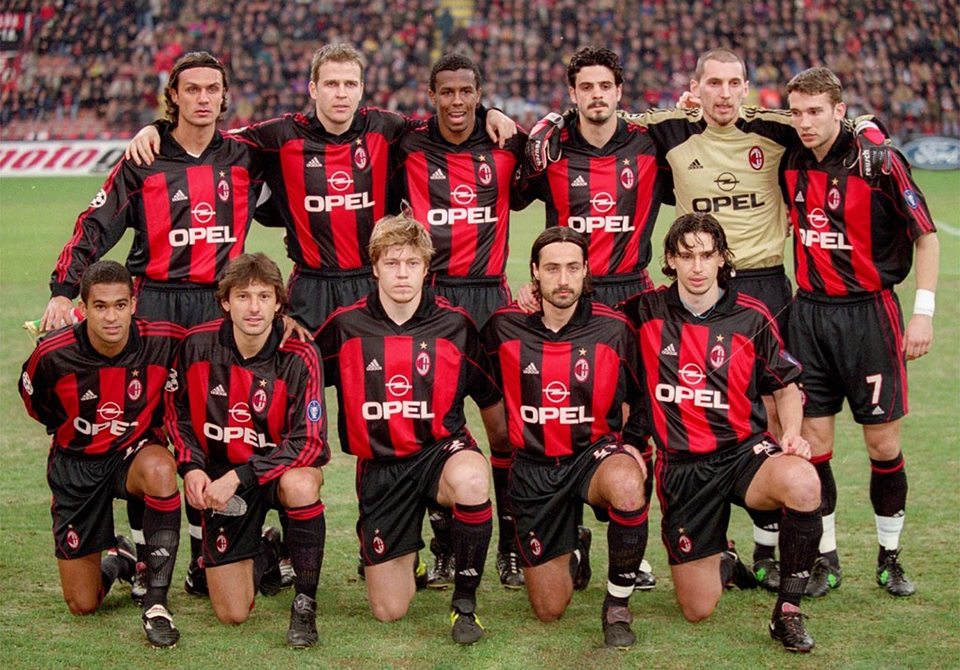
Milan collected three successive Serie A titles with Capello at the helm, and with success on the pitch changes to the kit remained subtle over the next few seasons. In 1992 a new sponsor arrived in the form of local dessert company Motta, and the following year a new kit deal was launched with the Italian sportswear manufacturer Lotto. Milan re-established their relationship with adidas in 1998, by which time they’d begun a long-term sponsorship by the German car giant Opel.

milan 90 history

As Berlusconi ventured into politics his desire to create a European supersquad had resulted in the arrival of some big names — Savicevic, Boban, Papin, Raducioiu, Lentini — all of whom now competed for positions in Milan’s line-up. As Capello struggled with the challenge of keeping his bloated roster of big names happy, the Dutch trio’s dominance became undermined and was effectively broken up. The last time the three played together was the 1993 European Cup final in Munich, a 1-0 defeat by old rivals Marseille. That summer Rijkaard returned to Ajax and Gullit unexpectedly left for Sampdoria. Van Basten stayed at Milan, unaware he’d already played the last game of his career. He remained on the sidelines throughout the 1993-94 season, missing out on the team’s European Cup triumph and that summer’s World Cup, before finally announcing his official retirement in 1995 at the age of 30.

milan 90 mvb

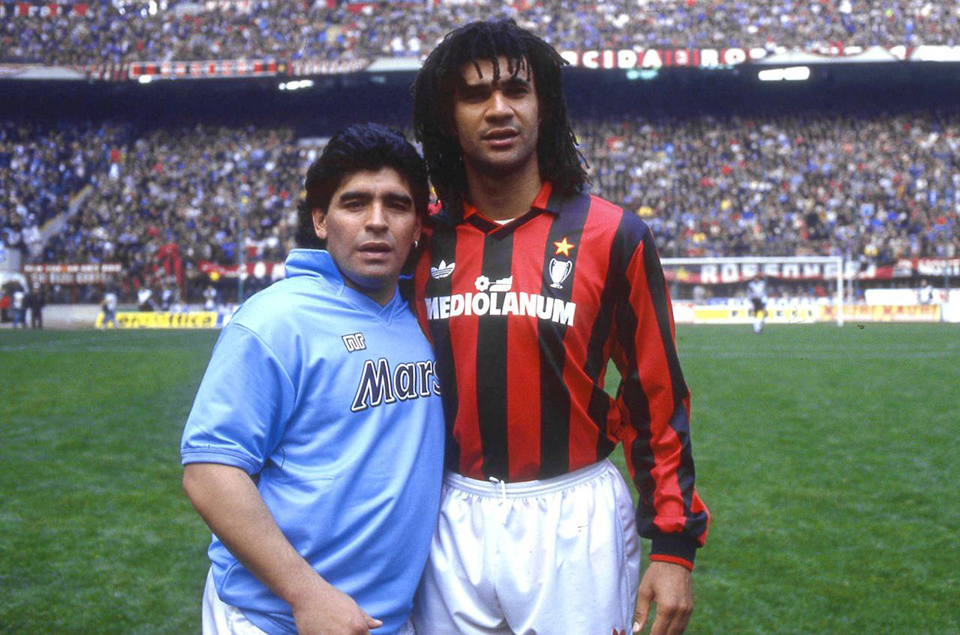
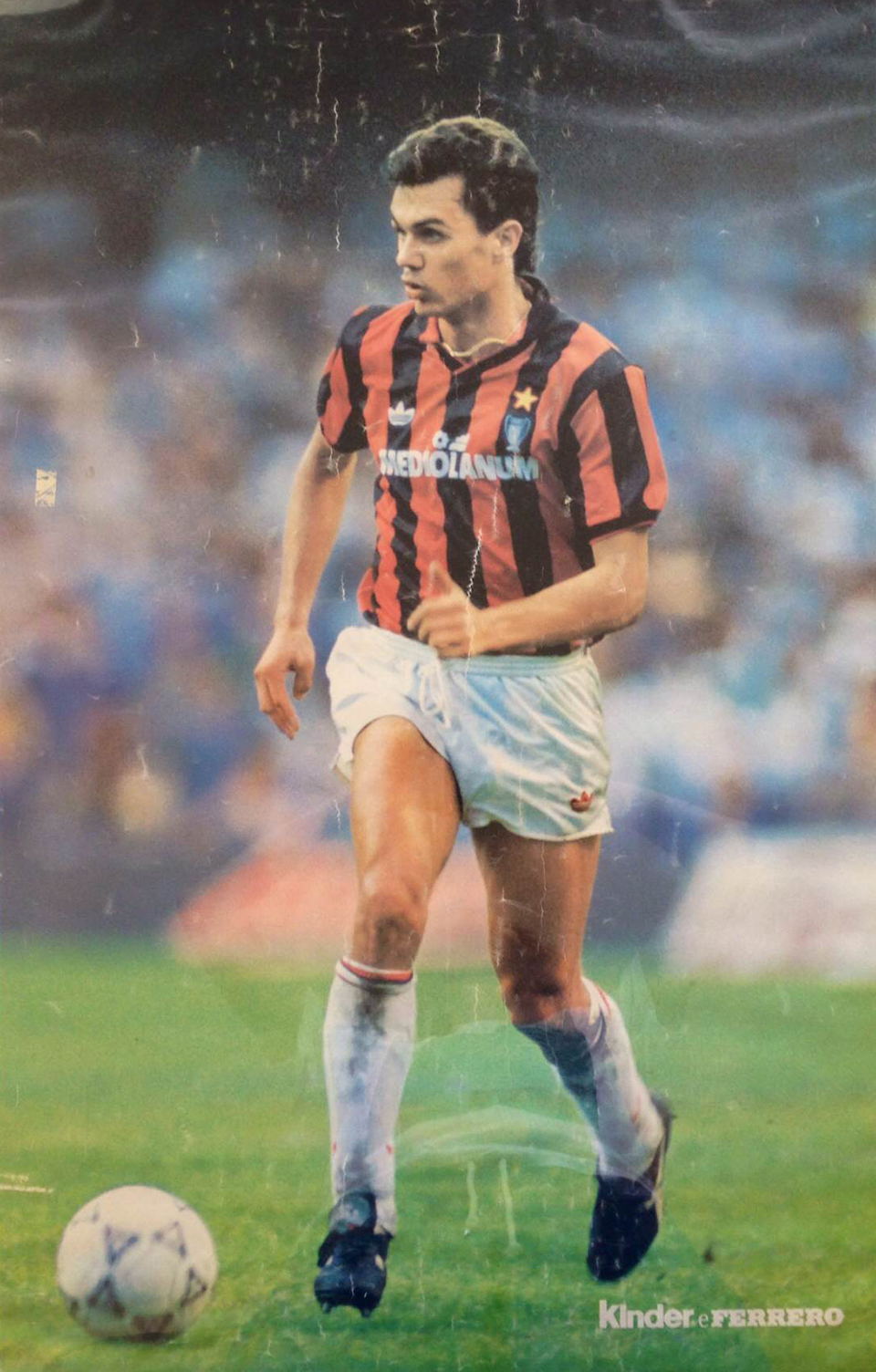
The same summer I bought my Milan shirt I also obtained a giant poster of a young Paolo Maldini wearing the same kit. It was free from the local supermarket in exchange for the purchase of several packets of apricot jam-filled Kinder brioche (my brother got Baggio). Something about the lighting always made me believe the photo was taken at the San Paolo in Naples (the ball is correct, Paolino wore short-sleeves in that fixture, and there’s clearly an ad for Mars in the background). Either way the poster hung pinned on my bedroom wall for over a decade, and now hangs framed in my apartment in New York, just feet from where I sit as I write this. A few years ago adidas relaunched the 1990-91 shirt as a limited edition replica, presumably for fans who now regretted not getting their hands on it the first time. Yet somehow the remake wasn’t quite the same. The sponsor was too large and the slightly bulbous adidas logo had been corrected. The material was too glossy, too well-made. It was as if the memories of both the shirt’s manufacturer and its consumer had been warped by the team’s own legend. Milan weren’t perfect, and nor was their shirt. But both came mighty close.

paolino poster